
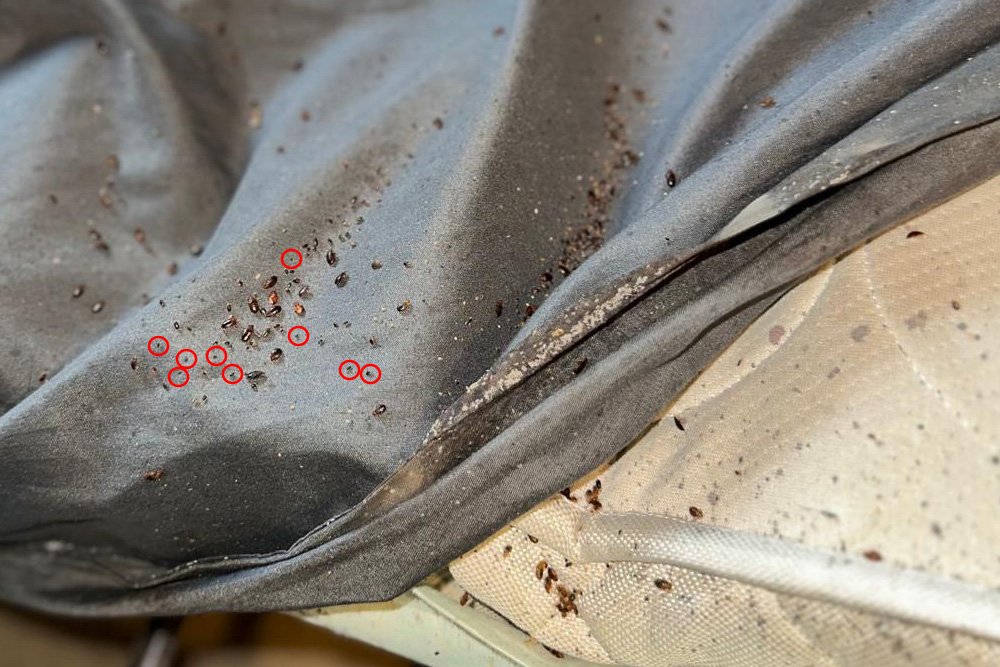

One of the easiest signs of a bed bug infestation isn’t the bug itself.
It’s the droppings they leave behind.
In fact, I’ve confirmed plenty of infestations without seeing a single live bed bug during the first few minutes of an inspection. The droppings often tell the story before the insects do.
What do bed bug droppings look like?
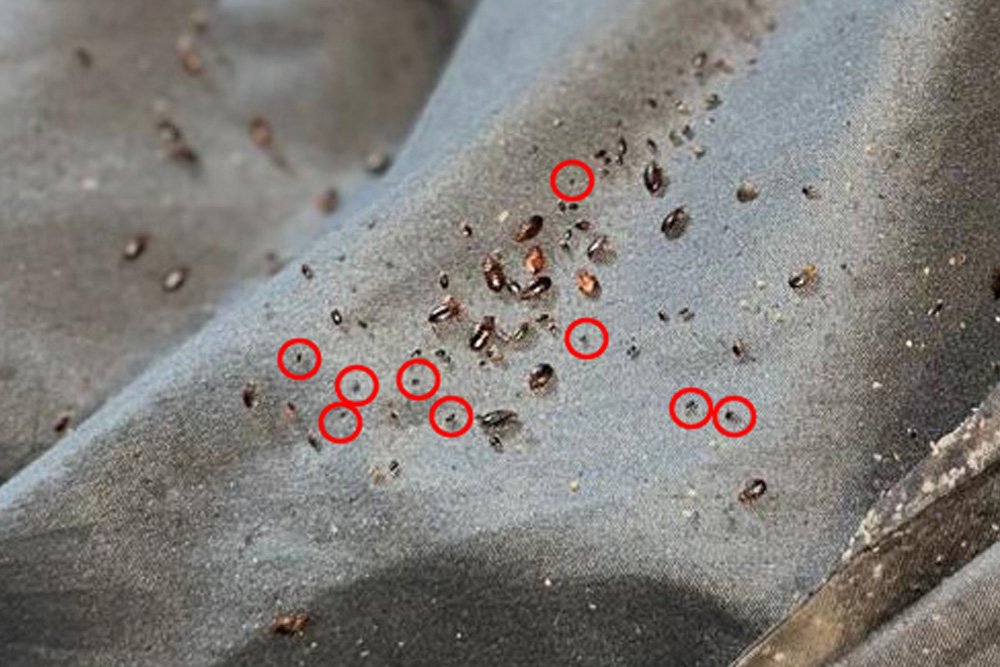
Bed bug droppings are small, dark spots that look a bit like someone has touched the fabric with the tip of a black felt-tip pen.
They’re usually:
- Black or very dark brown.
- About the size of a pinhead.
- Slightly absorbed into fabric rather than sitting on top of it.
- Found in clusters rather than on their own.
Unlike dirt or crumbs, they don’t brush away easily because they’ve soaked into the material.
Where are they usually found?
The first places I check are:
- Mattress seams.
- Around mattress labels.
- Bed frame joints.
- The back of the headboard.
- Slats and fixing points.
- Behind bedside furniture.
If bed bugs are living somewhere, you’ll often find droppings close to their hiding place.
A mistake we see all the time
People often mistake mould, ink marks or general dirt for bed bug droppings.
The location is just as important as the mark itself.
A single black spot on a skirting board doesn’t tell me much.
A cluster of black spots tucked into a mattress seam immediately gets my attention.
Can you wipe them away?
Sometimes.
Fresh droppings may smudge slightly if you dampen them, but older marks usually stain the fabric permanently.
That’s why you’ll often see old evidence even after the insects have moved elsewhere.
My advice
Never rely on one black mark alone.
Look for patterns.
When droppings appear alongside eggs, cast skins or live bed bugs, you can be much more confident about what you’re dealing with.