
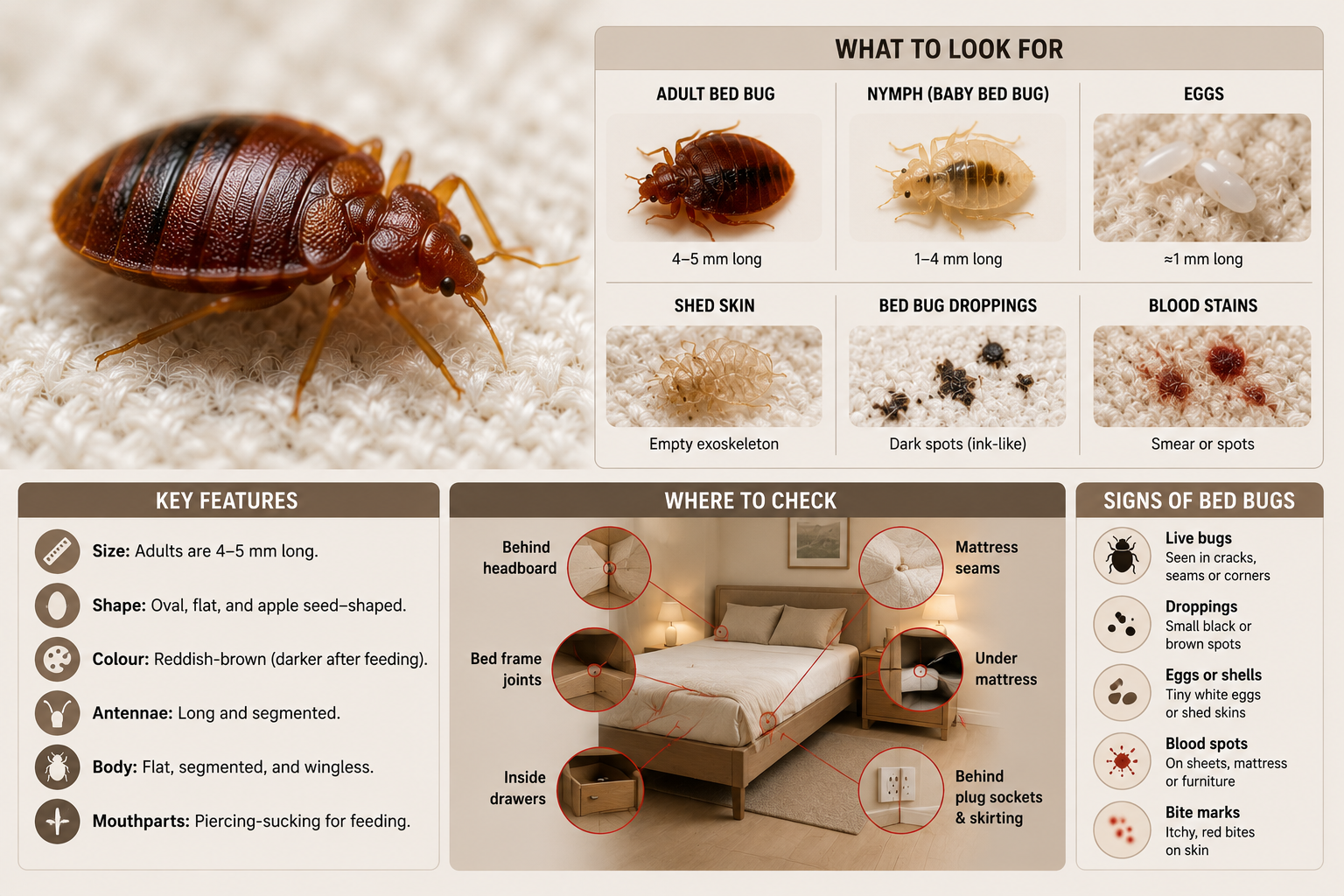

Identifying bed bugs isn’t about finding a single insect.
It’s about building a picture from all the available evidence.
The most reliable inspections combine what you see, where you find it and how those clues fit together.
Step 1 – Look for Live Bed Bugs
Adult bed bugs are:
- Reddish-brown.
- Flat and oval.
- Around 4–7 mm long.
- Wingless.
Young bed bugs are much smaller and paler but have the same basic shape.
Step 2 – Search for Eggs
Eggs are:
- White.
- Tiny.
- Oval.
- Usually hidden in cracks and seams.
Finding eggs often indicates an active infestation.
Step 3 – Look for Droppings
Tiny black spots are one of the strongest signs of bed bug activity.
Inspect:
- Mattress seams.
- Bed frames.
- Headboards.
- Bedside furniture.
- Skirting boards.
Step 4 – Look for Shed Skins
As bed bugs grow, they moult several times.
These empty shells are often easier to find than live insects.
Step 5 – Consider Bite Patterns
Although bites can support your suspicions, they should never be used on their own to diagnose bed bugs.
Many other insects and skin conditions produce similar marks.
Step 6 – Inspect the Right Places
Always begin close to where people sleep.
Work outwards through:
- The mattress.
- Bed frame.
- Headboard.
- Bedside furniture.
- Upholstered furniture.
- Nearby cracks and crevices.
The further you move from the bed, the less likely you are to find the first signs of activity.
Bring the Evidence Together
The strongest identification usually combines several clues, such as:
- Live insects.
- Eggs.
- Shed skins.
- Black droppings.
- Blood spots.
- Overnight bites.
The more evidence you gather, the more confident you can be in your diagnosis.
🔍 Inspection Insight
The best inspections aren’t rushed.
They follow a logical sequence, ruling possibilities in or out as more evidence is found.
That’s exactly how professional inspections work.
✅ What I’d Do Next
If you’ve found one possible sign of bed bugs, continue searching before reaching a conclusion.
Several pieces of evidence together are far more convincing than a single clue on its own.
Related Guides
- What Do Bed Bugs Look Like?
- How to Check for Bed Bugs
- Where to Look for Bed Bugs
- What Do Bed Bug Eggs Look Like?
- What Do Bed Bug Droppings Look Like?
- What Do Bed Bug Shells Look Like?
- What Do Bed Bug Bites Look Like?
- Bed Bugs vs Fleas
- Bed Bugs vs Carpet Beetles
FAQs
What’s the easiest way to identify bed bugs?
Look for several signs together, including live insects, droppings, eggs and shed skins.
Can one bite confirm bed bugs?
No. Bites alone are not enough to identify an infestation.
Where should I inspect first?
Always start with the bed and work outwards.